You’re a skilled plumber in Sheffield. Your work is excellent. Your customers recommend you. But when a homeowner in Rotherham types “plumber near me” into Google — your competitor appears, and you don’t.
That’s not a quality problem. It’s a visibility problem. And it’s exactly what local SEO solves.
This guide explains what local SEO is, how it works for tradespeople across South Yorkshire, and what you need to do to start appearing when customers in your area are ready to book. Whether you’re a plumber in Sheffield, an electrician in Doncaster, or a roofer in Rotherham — this is written for you.
Ready to get found locally? Get in touch with Cute Parachute today.
What Is Local SEO?
Local SEO is the process of making your trade business appear on Google when someone nearby searches for your services.
When a homeowner in Sheffield types “emergency electrician near me” or “boiler repair Sheffield,” Google shows them a list of local businesses. Local SEO is what determines whether your business appears on that list — or your competitor’s does.
It’s different from regular SEO, which tries to rank nationally or globally. Local SEO is hyper-targeted. It’s about being visible to the right people, in the right area, at exactly the right moment — when they have a problem and need someone to fix it today.
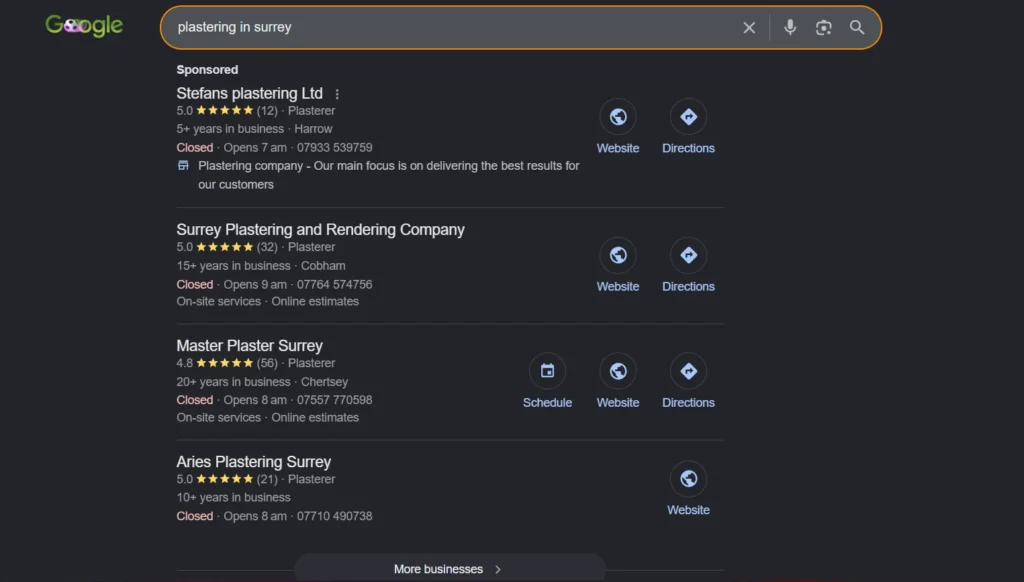
Google shows local businesses in three places:
- The Local Map Pack — the map and three business listings that appear at the top of results
- Organic website results — the blue links below the map
- Google Business Profile panel — the business card that appears on the right side of the screen
Why Local SEO Matters More Than Ever for Tradespeople
Ten years ago, word of mouth was enough. A good reputation spread through neighbours, a card on a noticeboard, a mention at the school gate.
That still happens — but it’s no longer the whole picture.
Today, the majority of people pull out their phone and search Google before they call anyone. They search, they check reviews, they look at photos, and they make a decision — often within minutes. If your business isn’t showing up in those results, you simply don’t exist to that customer.
Here’s what makes local search different from browsing: these people aren’t browsing. They have a leak. They need a new boiler. Their roof is damaged. They have a budget and they need someone now.
That’s high-intent traffic. These are the best possible leads — and local SEO puts your business directly in front of them.
Your competitors in Sheffield and across South Yorkshire are already investing in this. Every month you’re not visible is a month’s worth of jobs going to someone else.
The 5 Core Signals That Drive Local SEO Rankings
Local SEO isn’t one single thing. Google uses a combination of signals to decide which businesses to show. Here are the five that matter most for tradespeople.
1. Google Business Profile
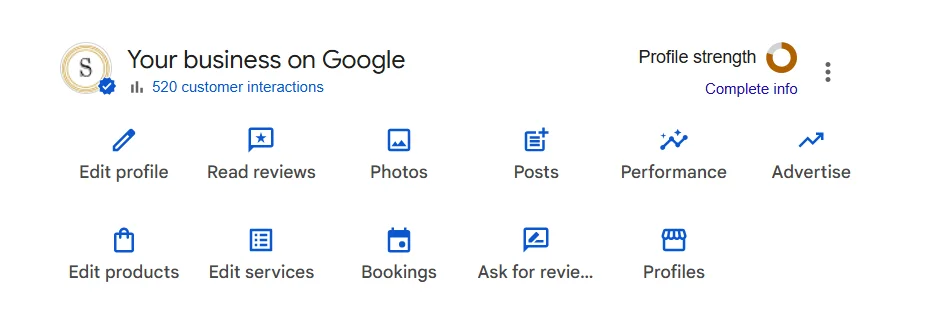
Your Google Business Profile (GBP) is the single most important factor for appearing in the Local Map Pack. It’s the listing that shows your business name, phone number, address, opening hours, photos, and reviews directly on Google.
Getting it right matters more than almost anything else.
Here’s what a well-optimised GBP looks like:
- Business name, address, and phone number are accurate and consistent
- Every category and service field is completed
- At least 10 high-quality photos of your work are uploaded
- Reviews are being collected consistently
- Google Posts are updated at least once a week
A Sheffield boiler installer with 40+ reviews and weekly GBP posts will outrank a competitor with an empty, half-finished profile — even if that competitor has been trading longer.
If you haven’t claimed and completed your GBP yet, that’s your first priority.
2. On-Page Website SEO
Your website tells Google what you do and where you do it. The more clearly and consistently you communicate that, the better your rankings.
For tradespeople, this means:
- Create a separate page for each service — “Boiler Repair Sheffield” and “Boiler Installation Sheffield” are different searches and need different pages
- Include your town or city name in the H1 heading, page title, and first paragraph of every location page
- Keep your NAP consistent — your Name, Address, and Phone number must be identical everywhere it appears online
- Embed a Google Map on your contact page to reinforce your location to Google
If your website is a single page with no location-specific content, you’re invisible for most of the searches your customers are making.
For tradespeople covering multiple areas — Sheffield, Doncaster, Rotherham, Barnsley — you need a dedicated page for each location. We build these as standard for every client at Cute Parachute.
3. Customer Reviews
Google uses reviews as a major ranking signal. More reviews, higher average ratings, and more recent activity all contribute to where your business appears in the Local Pack.
But there’s something more important than volume: consistency.
A steady stream of new reviews signals to Google that your business is active and trusted. Fifty reviews collected three years ago and nothing since is weaker than ten reviews collected steadily over the past six months.
The simplest way to get reviews: after every job, send the customer a WhatsApp message with a direct link to your Google review page. Keep it short. Most happy customers will leave a review if you make it easy.
One more thing: respond to every review, positive and negative. Responding signals activity to Google and builds trust with potential customers who read reviews before deciding who to call.
4. Citations — Getting Listed in the Right Directories
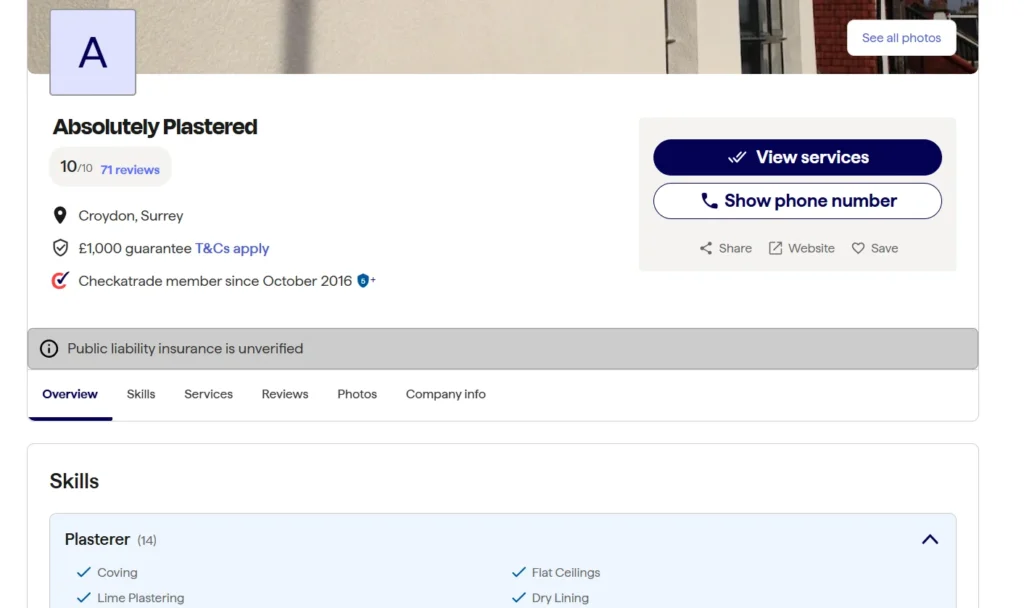
A citation is any mention of your business name, address, and phone number (NAP) on another website. Directories like Checkatrade, Rated People, MyBuilder, and Yell are citation sources.
The more consistent citations you have across trusted directories, the more Google trusts that your business is legitimate and well-established.
Key directories for UK tradespeople:
- Checkatrade
- Rated People
- MyBuilder
- Yell.com
- Bing Places for Business
- Apple Maps
- Facebook Business page
The most common mistake: having slightly different information across directories. “John Smith Plumbing, 14 High Street” on one site and “J Smith Plumbing, 14 High St” on another creates confusion for Google and weakens your local authority. Keep your NAP identical everywhere.
Aim for 20–30 consistent citations as a minimum starting point.
5. Service Area Pages — Ranking in Multiple Locations
If you serve multiple towns across South Yorkshire, each one needs its own dedicated page on your website.
“Plumber Sheffield” and “Plumber Rotherham” are completely different searches with completely different competition. One page trying to cover both will rank for neither.
Each location page needs:
- The town name in the page title, H1, and naturally throughout the content
- Unique content specific to that area — not the same text copied and changed
- Internal links connecting your location pages to each other
- Its own Google Business Profile posting strategy where possible
For a South Yorkshire tradesperson, this means separate pages for Sheffield, Doncaster, Rotherham, Barnsley, and any other towns you regularly cover. We handle this entire process as part of our local SEO service for South Yorkshire tradespeople.
Local SEO Keywords — What Should You Actually Target?
Not all keywords are equal. For tradespeople, there are three types worth targeting:
Service keywords — what you do, in a location “plumber Sheffield” / “emergency electrician Doncaster” / “roofer Rotherham”
Problem keywords — what the customer’s problem is “boiler not working Sheffield” / “roof leaking Barnsley” / “blocked drain Doncaster”
Question keywords — what customers ask before booking “how much does a new boiler cost in Sheffield?” / “do I need a gas safe engineer for a boiler service?”
Where to use them:
- Page titles and H1s — primary keyword, naturally phrased
- First 100 words of every page
- H2 subheadings throughout the content
- Image alt text — describe what’s in every image, with location where relevant
Don’t force keywords in awkwardly. If it sounds unnatural when you read it aloud, rewrite it.
Local SEO vs Google Ads — Which Is Better for Tradespeople?
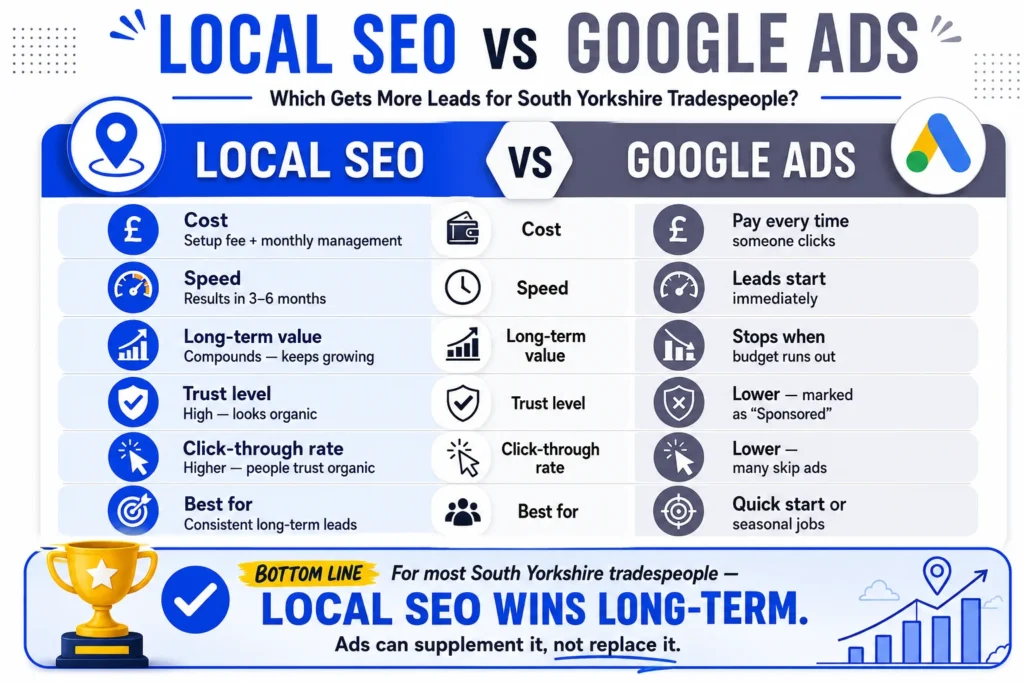
This is one of the most common questions tradespeople ask before investing in their online presence.
The short answer: both have a place, but they work very differently.
| Local SEO | Google Ads | |
| Cost | Setup fee + monthly management | Pay every time someone clicks |
| Speed | Results in 3–6 months | Leads start immediately |
| Long-term value | Compounds — keeps growing over time | Stops the moment your budget runs out |
| Trust level | High — organic results look credible | Lower — results are marked “Sponsored” |
| Click-through rate | Higher — most people skip ads | Lower — many searchers ignore paid results |
| Best for | Consistent, long-term lead generation | Quick start or filling gaps in quiet months |
For most tradespeople in South Yorkshire who want consistent enquiries without paying per click, local SEO delivers better long-term return on investment. Google Ads can supplement it during quiet periods — but it shouldn’t be your only strategy.
How Long Does Local SEO Take to Work?
This is the honest answer that most agencies avoid giving.
Google Business Profile improvements: visible results within 4–8 weeks. Completing your profile, uploading photos, and getting your first reviews can start moving you up the Local Pack relatively quickly.
Map Pack rankings: 2–4 months for lower-competition searches in South Yorkshire towns. More competitive terms like “plumber Sheffield” may take longer depending on how established your competitors are.
Organic website rankings: 3–6 months is a realistic timeframe for most trades keywords, assuming your website is properly set up and your content is being built consistently.
Why does it take time? Google needs to build trust in your business before it’s willing to put you in front of customers. That trust is built through consistent signals — reviews, citations, content, and activity — accumulating over months.
The tradespeople who start in January are the ones appearing at the top by summer. The ones who wait until summer are starting a six-month clock from scratch.
How to Track Whether Local SEO Is Working
You don’t need expensive software to measure your progress. Google provides everything you need for free.
4 things to track every month:
- GBP views and calls — inside your Google Business Profile dashboard, you can see how many people viewed your profile, called you, and asked for directions
- Website traffic from organic search — Google Analytics shows you how many visitors came from Google searches
- Keyword rankings — Google Search Console shows which keywords your pages are appearing for and at what position
- Number of enquiries — track how many calls, WhatsApp messages, and form submissions came through organic channels
Set up Google Analytics and Google Search Console on your website from day one. Both are free and give you the data you need to understand what’s working.
Can a Tradesperson Do Local SEO Themselves?
Yes — to a point.
Your Google Business Profile is absolutely something you can set up and manage yourself. Completing your profile, uploading photos, responding to reviews, and posting weekly updates are all things any tradesperson can do with 30–60 minutes a month.
Citations are manageable too. Listing your business on Checkatrade, Rated People, Yell, and the other key directories is straightforward, just time-consuming to do properly.
Where it gets harder:
- Website SEO — creating properly structured service area pages, optimising your page titles and content, and building internal links takes technical knowledge and time
- Content strategy — knowing which keywords to target, what to write about, and how to structure content for Google requires ongoing expertise
- Link building — getting other trusted websites to link to yours is one of the most powerful ranking signals, and also one of the hardest to build organically
Most tradespeople we work with across Sheffield and South Yorkshire tried handling their own SEO first. The most common feedback: the time it took away from actual jobs made it unworkable within a few months.
If you’d rather focus on the work you’re trained for, we handle the rest.
What Should a South Yorkshire Tradesperson Focus on First?
If you’re starting from scratch, here’s the priority order for your first 90 days:
Week 1–2: Claim and fully complete your Google Business Profile. Fill in every field, upload 10+ photos of your work, and add your service areas across Sheffield, Doncaster, Rotherham, or wherever you operate.
Week 3–4: Audit your website. Does it have a separate page for each service and each location? If not, that’s your next project. If you don’t have a website yet, this is when you need one — see our web design for South Yorkshire tradespeople.
Month 2: Start collecting Google reviews consistently. Contact your last 10 satisfied customers. Set up a simple follow-up process so every job ends with a review request.
Month 2–3: List your business on 10–15 key directories with identical NAP information. Start with Checkatrade, Rated People, Yell, and Bing Places.
Month 3 onwards: Start producing one piece of content per month answering a question your customers actually ask — “How much does a new boiler cost in Sheffield?” or “Do I need planning permission for a conservatory in Rotherham?” This builds long-term authority in your area.
Frequently Asked Questions
What is local SEO in simple terms?
Local SEO is how you make your business appear on Google when someone nearby searches for your service. When a homeowner in Sheffield types “plumber near me,” local SEO is what determines whether your number comes up — or your competitor’s does.
How long does local SEO take to show results for a tradesperson?
Google Business Profile improvements can become visible within 4–8 weeks. Website rankings typically take 3–6 months depending on how competitive the keywords are in your area. Local SEO is a long-term investment — the earlier you start, the earlier you see consistent returns.
Is local SEO worth it for a one-man trade business?
Yes — especially for sole traders. You’re competing for the same searches as larger companies with bigger marketing budgets. Local SEO levels the playing field because Google rewards relevance and trust, not company size. A well-optimised one-man plumbing business can and does outrank larger competitors.
How much does local SEO cost for a tradesperson in the UK?
A proper local SEO setup typically costs £400–£600 as a one-off. Ongoing monthly management — covering content, citations, GBP management, and reporting — ranges from £300–£800 per month depending on how competitive your area and trades niche are. At Cute Parachute, we work exclusively with tradespeople across South Yorkshire, so our pricing is built around what works for businesses like yours.
Do I need a website for local SEO?
Not always — your Google Business Profile alone can get you into the Local Map Pack for some searches. But a properly structured website dramatically improves your overall results. It gives you the ability to rank for organic results as well as the map pack, and it gives you a platform to build long-term authority in your area.
What’s the difference between local SEO and regular SEO?
Regular SEO tries to rank nationally or globally for broad terms. Local SEO focuses specifically on appearing when someone in your service area searches for what you do. For a tradesperson working in South Yorkshire, local SEO is almost always more relevant — and far more likely to generate actual enquiries — than national SEO.
What’s the difference between local SEO and regular SEO?
You now understand what local SEO is, why it matters, and exactly how it works for tradespeople.
At Cute Parachute, we work exclusively with tradespeople across Sheffield, Doncaster, and Rotherham. We don’t work with restaurants, retailers, or tech companies. We build local SEO strategies for plumbers, electricians, roofers, plasterers, and builders — and we know what it takes to rank in South Yorkshire.
If you’re ready to start showing up when local customers search for your trade:
Message us on WhatsApp — quickest way to get a response
Or visit our contact page — tell us about your business and we’ll come back to you within one working day